
When planning a luxury family safari in Namibia, one question that we hear from clients time and again: South Africa vs Namibia family safari: which is the better choice for our family?
The answer depends less on wildlife checklists than on the kind of journey your family wants to share.
South Africa offers exceptional game viewing, short travel distances and a wide range of family-friendly lodges. Namibia replaces abundance with scale, vast desert landscapes, quiet roads, dramatic scenery and experiences that extend well beyond traditional safari.
Both deliver remarkable holidays. They simply do so in different ways.
This guide compares South Africa and Namibia across the factors that matter most to families, helping you decide which destination best fits your children’s ages, your pace of travel and the memories you hope to create together.
Wildlife – Quantity or Context?
South Africa
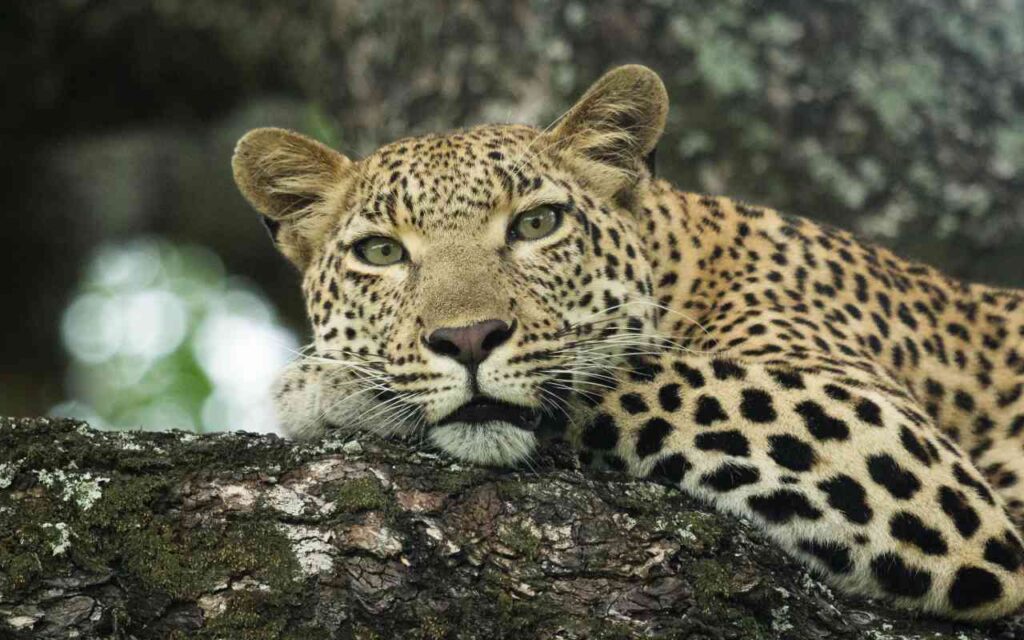
For pure wildlife viewing, South Africa is difficult to beat for a luxury family safari.
Private reserves bordering the Kruger National Park offer some of Africa’s highest concentrations of big game. Lions, elephants, leopards, rhino and buffalo are often seen within a few game drives, while experienced guides interpret every track and alarm call along the way.
For families with younger children or those visiting Africa for the first time, this consistency builds excitement quickly. Every drive carries genuine anticipation, and sightings often come one after another.
Many private reserves also allow off-road driving, meaning guides can position vehicles carefully for exceptional viewing without the crowds found in larger national parks.
Namibia
Namibia tells a different wildlife story.
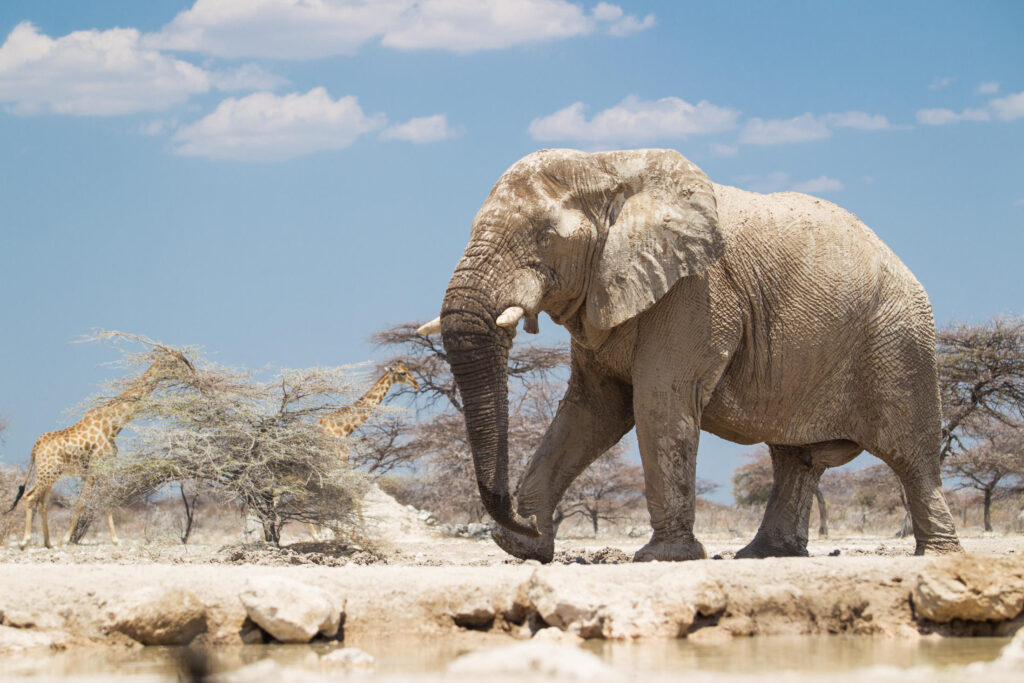
Animals are woven into extraordinary landscapes rather than concentrated around a handful of safari areas. Watching a desert-adapted elephant emerge from a dry riverbed, or a herd of springbok crossing an endless gravel plain beneath pale morning light, becomes as memorable as the species itself.
Etosha National Park provides excellent wildlife viewing, particularly around its waterholes during the dry season, while Damaraland introduces desert-adapted elephants, black rhino and some of Africa’s most distinctive scenery.
The result is a Namibia luxury safari that feels slower, quieter and more exploratory.
Journey Africa’s view: If wildlife density is your highest priority, South Africa has the advantage. If your family values landscape and discovery as much as animal encounters, Namibia often creates the more distinctive journey.
Landscape – Classic Safari or Extraordinary Contrast?
South Africa
South Africa’s safari landscapes are lush, varied and familiar.
Acacia woodland, rolling bushveld and riverine forests provide classic safari scenery, particularly in the Greater Kruger region. Families can also combine safari with vineyards, beaches or the mountains surrounding Cape Town, creating a journey with considerable variety.

Namibia
Few countries rival Namibia for dramatic contrast.
One day begins among the towering red dunes of Sossusvlei. The next crosses granite mountains in Damaraland before arriving at Etosha’s shimmering salt pan, where elephants gather at floodlit waterholes after sunset.
These changing environments become part of the adventure.
Children rarely feel as though they are repeating the same experience from lodge to lodge.

Travel Times and Journey Style
South Africa
South Africa is easier to navigate.
Daily flights connect major cities with safari regions, while transfers between destinations are generally straightforward. Families with younger children often appreciate fewer long driving days and shorter overall travel times.
It also works particularly well for shorter adventures.
Namibia
Namibia rewards travellers willing to embrace the journey itself.
Distances are greater, and many itineraries combine scenic road travel with light aircraft between remote camps. Rather than rushing, we recommend allowing ten to fourteen nights to experience the country’s different regions comfortably.
Children often enjoy the changing scenery, wildlife sightings from the road and the sense of travelling through genuinely wild places.
A carefully paced itinerary makes all the difference.
Malaria and Health Considerations
South Africa
Many South African safari areas, including the Eastern Cape, Madikwe and the Waterberg, are malaria-free. The main risk sits in the Kruger region, close to malaria-prone Mozambique, and is generally low and seasonal.
Health concerns are usually more manageable than families expect. Preventative medication is straightforward and widely recommended, but choosing the right location in South Africa remains an additional consideration for families travelling with younger children.
Namibia
Much of Namibia is malaria-free.
Regions such as Sossusvlei, Swakopmund and much of Damaraland carry no malaria risk, while Etosha’s risk is seasonal and generally lower than many safari destinations further east.
For some families, particularly those travelling with younger children, this provides welcome reassurance.
Which Ages Suit Each Destination?
South Africa
South Africa suits almost every age group.
Many lodges welcome children from six years old, while several properties offer dedicated family programmes, children’s game drives, bush walks and junior ranger activities.
Private villas also make travelling with grandparents particularly straightforward.

Namibia
Namibia often shines with slightly older children.
Around eight years and above, children begin to appreciate the landscapes, desert activities and changing environments that define the country.
Climbing dunes at sunrise, learning about desert survival from local guides or searching for rhino on foot creates lasting engagement that extends beyond traditional game drives.
Teenagers, especially, often describe Namibia as one of their favourite destinations in Africa.

Activities Beyond Safari
South Africa
South Africa offers enormous variety.
Families can combine safari with:
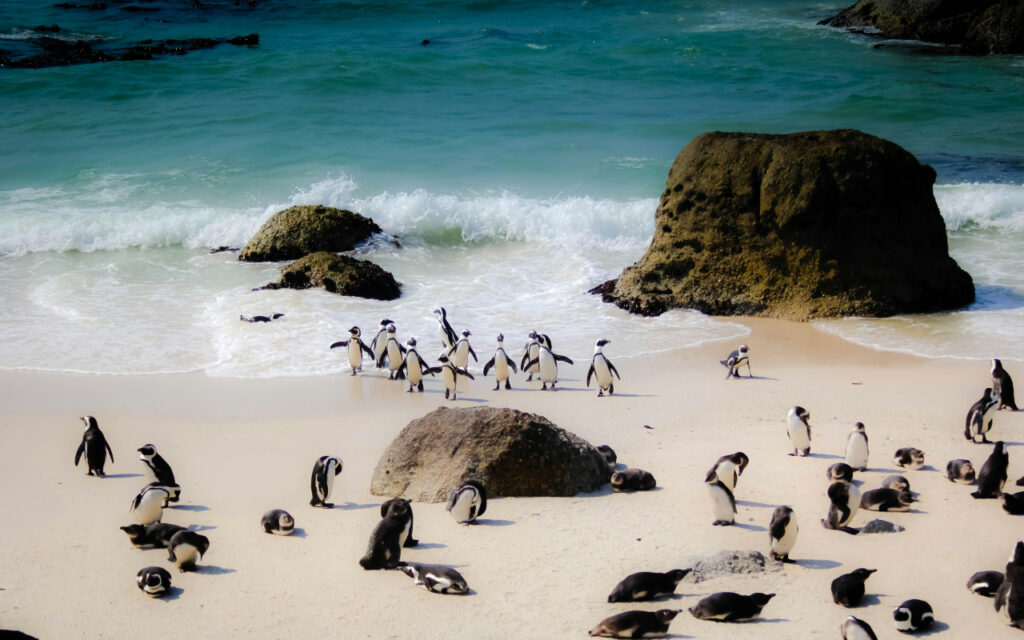
- Penguin encounters on the Cape Peninsula
- Whale watching in season
- Vineyard lunches
- Scenic coastal drives
- Mountain walks
- Cultural experiences
- Private marine safaris

Namibia
Adventure is built into Namibia.
Alongside wildlife viewing, families might:
- Climb the dunes of Sossusvlei at dawn
- Kayak alongside Cape fur seals
- Explore the Atlantic coastline
- Visit ancient San rock art
- Track desert-adapted elephants with specialist guides
- Sleep beneath brilliant southern skies
- Discover shipwrecks and desert canyons
For naturally curious children, Namibia offers something new almost every day.
Luxury and Family Accommodation
South Africa
South Africa has one of Africa’s largest collections of luxury family lodges.
Expect spacious suites, dedicated children’s menus, swimming pools, family villas and experienced childcare in many properties.
Private game reserves also allow highly personalised safari experiences with flexible schedules.

Namibia
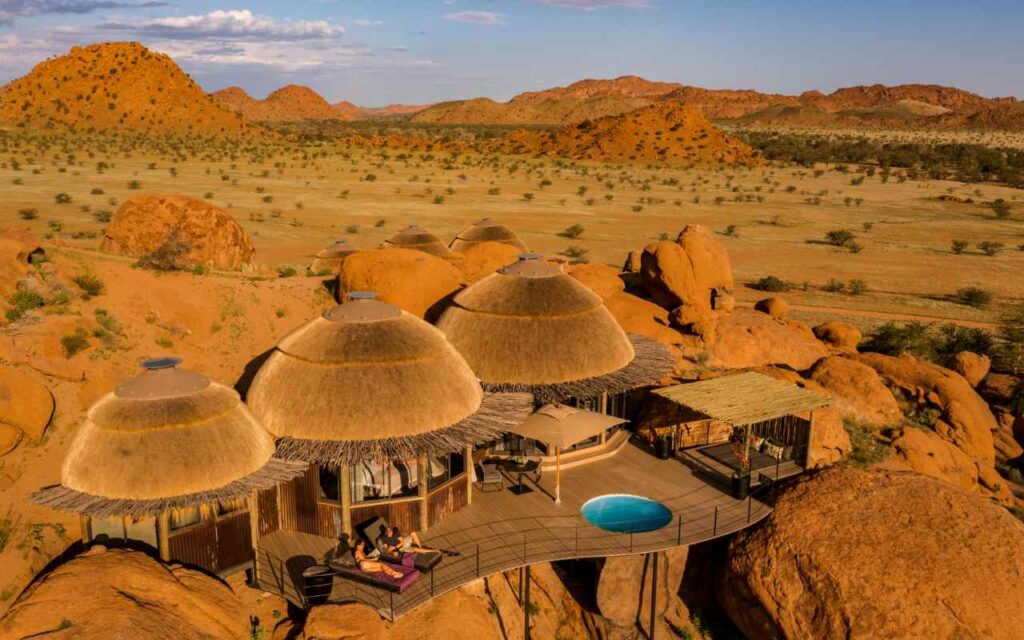
Luxury in Namibia feels different.
Rather than polished formality, it centres on space and privacy.
Suites are often widely separated, overlooking endless desert or open plains. Firelight replaces busy lodge lounges, while dinners beneath the stars feel quietly memorable.
Many lodges offer excellent family suites and interleading accommodation, though availability is naturally more limited than South Africa’s larger hospitality market.
Privacy and Exclusivity
Families increasingly value space as much as luxury.
South Africa
South Africa’s private reserves manage visitor numbers carefully, yet popular sightings can still attract several safari vehicles.
The quality of guiding remains exceptional, but game density inevitably means more activity.
Namibia
Namibia feels wonderfully uncrowded.
You may spend an entire morning without seeing another vehicle.
Private concessions, vast conservation areas and low visitor numbers create an unhurried rhythm that many families find deeply restorative.
For travellers seeking discretion and genuine solitude, Namibia is difficult to surpass.
Cost and Overall Value
South Africa
South Africa offers perhaps the widest range of family safari budgets in Southern Africa.
Excellent four-star lodges sit alongside world-class luxury properties, making it easier to tailor holidays across different price points.
Competition also keeps value strong.
Namibia
Namibia is often perceived as expensive, largely because of greater travel distances and smaller, more remote lodges.
However, costs reflect a different style of journey.
Rather than paying purely for wildlife, families are investing in access to extraordinary landscapes, conservation-led properties and experiences that few destinations can replicate.
For many, that represents exceptional long-term value.
Seasonality
South Africa
South Africa is a true year-round destination.
Winter from May to September offers excellent safari conditions with cooler temperatures and easier wildlife viewing.
Summer brings greener landscapes, migratory birds and newborn animals.
Cape Town is best visited during the Southern Hemisphere summer, making December through March ideal for combining city, coast and safari.
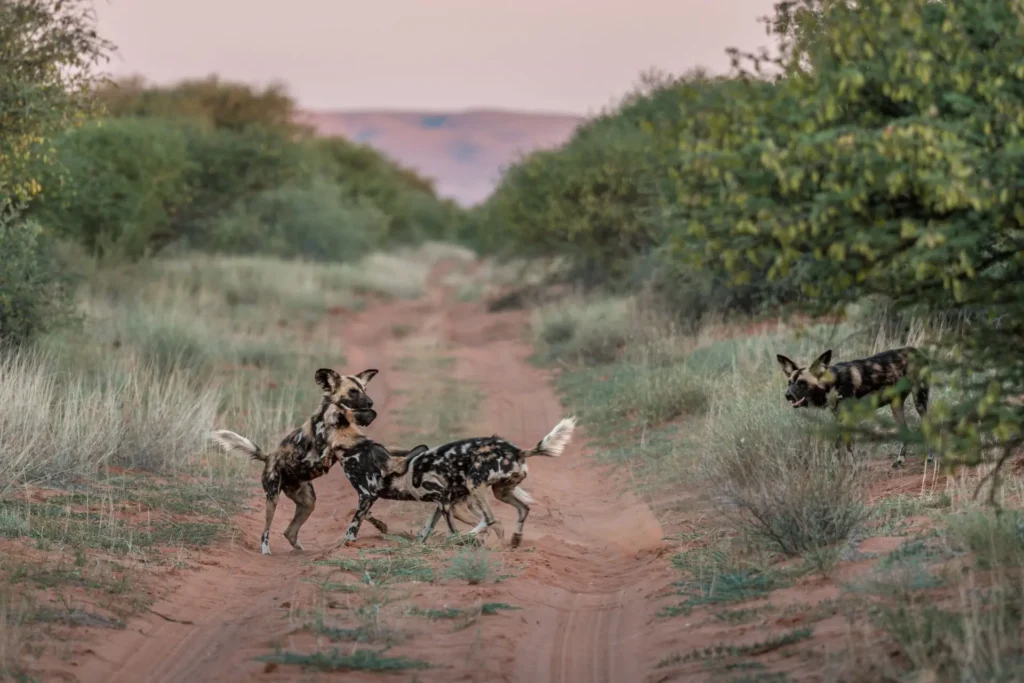
Namibia
Namibia is also rewarding throughout the year, although experiences vary.
The dry season, from roughly June to October, concentrates wildlife around waterholes and provides cooler daytime temperatures.
The green season transforms parts of the country with dramatic skies and softer light, making it particularly attractive for photographers and returning visitors.
Each season simply tells a different story.

Which Destination Is Better for a First Family Safari?
There is no universal answer.
If your priority is seeing the Big Five, enjoying shorter transfers and introducing younger children to safari, South Africa is usually the stronger first choice.
If your family values exploration, dramatic landscapes and combining wildlife with broader adventure, Namibia offers an experience unlike anywhere else in Southern Africa.
Neither choice is a compromise.
They simply begin different lifelong relationships with Africa.
Which Families Usually Choose South Africa?
South Africa is often best suited to families who:
- Are planning their first safari
- Have children under eight
- Want frequent wildlife sightings
- Prefer shorter travel days
- Wish to combine safari with Cape Town or the Garden Route
- Need the widest choice of luxury family accommodation
Which Families Usually Choose Namibia?
Namibia tends to appeal to families who:
- Have older children or teenagers
- Enjoy road journeys and changing landscapes
- Prefer fewer crowds
- Want wildlife alongside adventure
- Appreciate architecture, photography and open space
- Are returning to Africa after a previous safari
Journey Africa’s Recommendation
South Africa vs Namibia family safariWe rarely begin planning by asking which country a client wants to visit.
Instead, we ask what they hope their family will remember ten years from now.
Sometimes that answer points clearly towards South Africa.
Sometimes it leads to Namibia, where children scramble across warm dunes at first light, families pause beside desert waterholes in complete silence and evenings unfold beneath more stars than many have ever seen.
Our role is not to sell one destination over another.
It is to shape the journey that fits your family, your pace and your expectations, drawing on first hand knowledge of the lodges, guides and conservation areas that consistently deliver exceptional experiences.
Discuss Which Destination Fits Your Family
Every family travels differently.
Some want the excitement of seeing the Big Five within the first afternoon. Others are searching for a quieter journey, where wildlife, landscapes and time together carry equal importance.
At Journey Africa, every Namibia family safari itinerary is designed from the ground up. We match destinations, lodges and guiding styles to your family rather than asking you to fit a predefined route.
If you are weighing up a South Africa vs Namibia family safari, we would be delighted to help you decide which destination feels right and design a journey that reflects it with care.