
Are you considering where to go for your next safari? Are you wondering what truly sets one destination apart from another?
I have recently returned from Botswana. A journey that moved through river systems, floodplains and dry, open landscapes, whilst staying at a series of very different camps, each revealing a distinct side of the country.
The wildlife was exceptional.
But what stayed with me most was something else entirely, the warmth of Botswana’s people. A quiet, genuine hospitality that sits beneath every experience and shapes the journey in ways that are harder to describe, but impossible to forget.
In this post, I will share what defines a Botswana luxury safari through the lens of that journey, and why it remains one of the most considered safari experiences in Africa.
Why Choose Botswana for Luxury Safaris?
Botswana does not compete on volume.
Its tourism model is deliberate and different, with fewer camps, fewer guests and more space. You feel this immediately, not just in the landscapes, but in the pace of each day.
Arriving into the Okavango Delta, there is a sense of distance. Channels stretching into the horizon. No roads. No sense of anything beyond where you are.
At Camp Xakanaxa, my first drives set the tone. A lion moving through filtered morning light. Red lechwe stepping through shallow floodwater. We stayed with each sighting longer than expected, because there was no reason not to.
But equally, it was the conversations that lingered. Guides sharing stories of the land, trackers reading the ground with quiet confidence. A warmth that felt natural rather than rehearsed.
Later, at Xugana Island Lodge, the rhythm slowed further. Afternoons on the water, the sound of reeds against the boat, and staff who seemed to anticipate what you needed before you asked.
This is what defines a luxury safari in Botswana: space not only for wildlife, but for connection.

What Makes Botswana Unique?
What makes Botswana different is not a single highlight; it is how the entire experience is shaped.
This is a safari defined by water, movement and space.
Unlike many other regions in Africa, where wildlife is often centred around permanent rivers or fixed ecosystems, Botswana’s Okavango Delta is dynamic. Floodwaters arrive seasonally from Angola, transforming dry land into a living, shifting network of channels, islands and floodplains.
You feel this constantly.
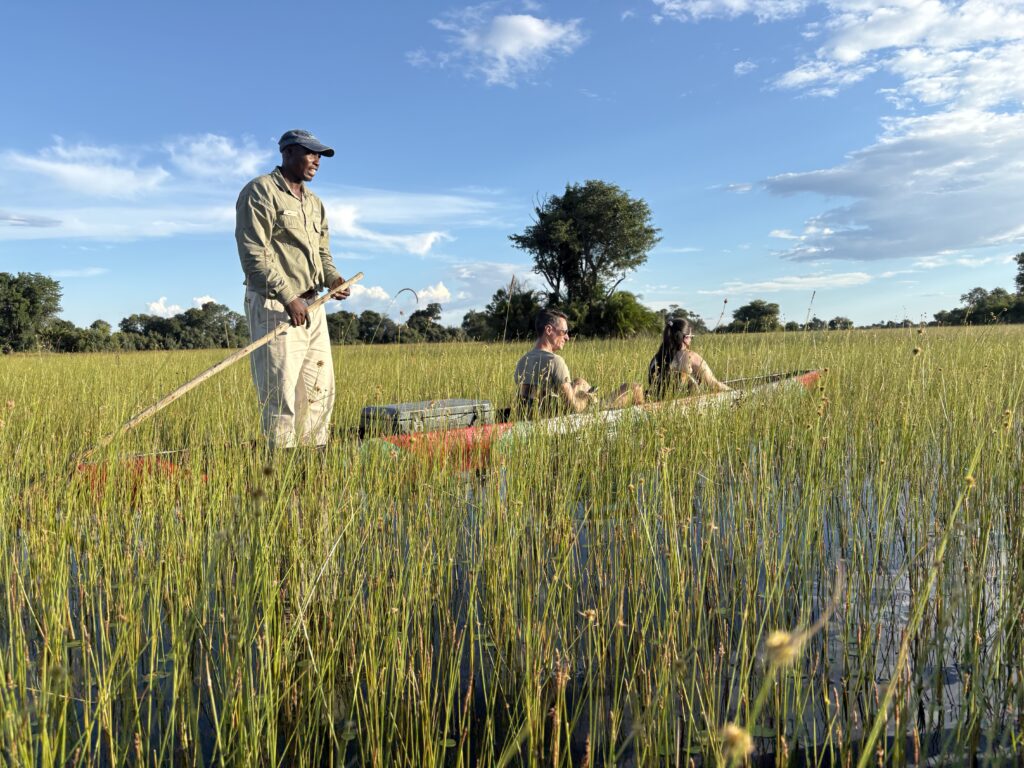
One moment, you are on a game drive tracking lions through dry woodland. The next, you are gliding silently through water in a mokoro, eye-level with reeds and lilies. Few safari destinations offer this duality of land and water, equally immersive.
At Camp Xakanaxa, this contrast plays out daily, as game drives weave between floodplains, where red lechwe and buffalo gather, then returning to camp as the light softens over the water.
From Xugana Island Lodge, the experience shifts almost entirely to water, which is quieter, more reflective, where the landscape feels fluid rather than fixed.
Beyond the Delta, Botswana expands further.
In Chobe, the scale of elephant herds is striking, among the largest concentrations in Africa, moving along the river in loose, constant motion. It feels active, alive, almost rhythmic.
In the Makgadikgadi, by contrast, the landscape opens into vast, pale horizons. Here, wildlife is more seasonal, like the zebra migrations, desert-adapted species, and a sense of exposure that is rare elsewhere.
At Leroo La Tau, overlooking the Boteti River, you see how life gathers where water persists, a single ribbon sustaining everything around it.
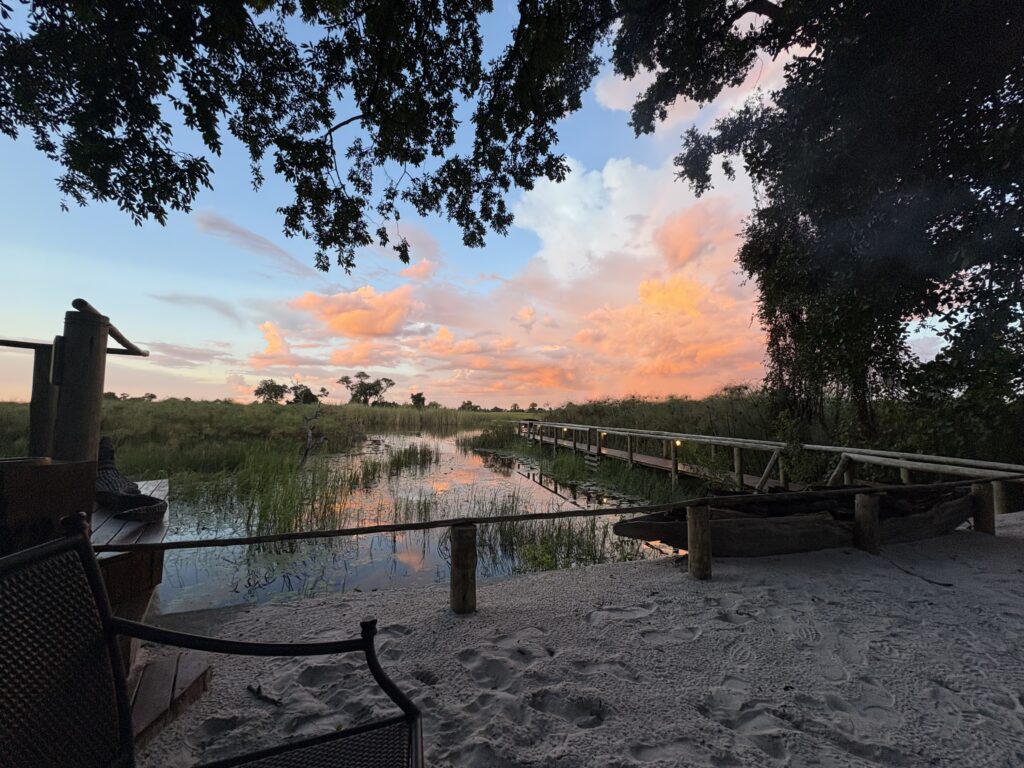
Even within the Delta, there are quieter corners.
At Nxamaseri Island Lodge, the Panhandle feels more remote, more spacious. The focus shifts toward birdlife, fishing, and the slower rhythm of water-based exploration.
What ties all of this together is Botswana’s commitment to preserving space.
There are no crowds. No sense of pressure. Sightings unfold naturally, often with very few vehicles present.
Compared to other safari regions in Africa, Botswana feels less curated and more elemental.
You are not moving between highlights. You are moving through ecosystems that are alive, changing, and allowed to exist on their own terms.
That is what makes it unique.
What Activities Can I Expect on a Luxury Safari in Botswana?
The variety of activities was one of the defining aspects of the journey, but again, it was the way they were delivered that stood out.
Game Drives — Observing Without Urgency?
Game drives were consistently strong, particularly in Xakanaxa and Chobe.
But what stayed with me was the pacing. Guides allowed sightings to unfold naturally. There was no pressure to move on, no sense of competition.
Instead, there was conversation. Interpretation. A shared appreciation of what was happening in front of us.

Water-Based Safari — A More Intimate Perspective?
Some of the most memorable moments happened on the water.
From Xugana, I travelled by mokoro through narrow channels. The world becomes quieter at that level, closer, more detailed. You notice the small things: the movement of insects across the surface, the subtle shift of light on water.
At Nxamaseri, motorboat safaris opened up wider spaces. The Panhandle feels expansive, and again, the experience was shaped as much by the guide’s insight as by what we saw.
These moments felt unhurried and often quietly shared, reinforcing that sense of connection that ran throughout the journey.

Walking and Cultural Connection?
Walking in Botswana brings a different kind of awareness. It’s slower, more deliberate and grounded in detail.
At Tsodilo Hills, that connection deepens further. This UNESCO World Heritage Site is home to ancient rock art, where guided walks reveal not just the paintings, but the stories and spiritual significance behind them.
It is a quieter and more reflective experience, which adds cultural depth to a Botswana luxury safari and reminds you that this landscape is as much lived as it is observed.

Best Time to Visit Botswana for Safari — What Did I Experience?
I travelled in March, at the end of the green season, just before the Delta begins to flood.
The landscape was lush from recent rains. Storms built in the afternoons, light felt softer, and the bush was full of life, birdlife in particular. Wildlife was more dispersed, but there was a sense of space and quiet that felt deeply appealing.
From April and May, floodwaters arrive into the Okavango, reshaping the landscape.
The dry season from May to October is considered the peak period. As water rises and vegetation thins, wildlife concentrates, making sightings more consistent. Cooler temperatures run from June to August, with warmer, excellent game viewing into September and October.
But the green season we experienced offered something different with fewer people, richer colour, and a more reflective luxury safari in Botswana.

What Does “Low Volume, High Value” Tourism Feel Like?
It is subtle, but it defines everything.
At Camp Xakanaxa, a sighting might involve just one other vehicle. At Xugana, an afternoon on the water might pass without encountering anyone else.
This creates a different atmosphere, one that feels calm, considered and personal.
It also allows something else to come through more clearly: the human connection.
Without crowds, interactions feel more natural. Conversations have space to develop. Relationships, even brief ones, feel genuine.
How Does Cost Compare on a Botswana Luxury Safari?
Low volume and high value mean that Botswana sits at the premium end of the safari spectrum.
Experiencing it firsthand, the reasoning becomes clear.
Camps are small. Access is by light aircraft. Concessions are private. Staffing is attentive, without ever feeling intrusive.
But more than anything, you are investing in space and in the quality of interaction.
Time with wildlife.
Time with guides.
Time to simply be present.
Journey Africa ensures that this investment is carefully structured, balancing regions, varying pace, and selecting camps that work in harmony.

What Stayed With Me Most — The People of Botswana?
The wildlife will always be remarkable.
But what stayed with me most was the people. This was the other impact of high value, low volume.
There is a warmth in Botswana that is understated but constant. It comes through in small gestures; the way you are welcomed, the way conversations unfold, the quiet pride in sharing their country.
Guides were knowledgeable, but also open. Staff are attentive, but never formal. There was a sense of authenticity that ran through every camp.
It is this human element that elevates a luxury safari in Botswana beyond the landscape.

Is Botswana the Right Choice for Your Next Luxury Safari?
If you are seeking:
- Space over density
- A slower, more immersive safari rhythm
- Water-based experiences alongside traditional game drives
- A conservation-led approach
- And a genuine sense of connection both to place and to people
Then Botswana stands apart.
From the waterways of the Okavango Delta to the riverbanks of Chobe, from the stillness of the Panhandle to the openness of the Makgadikgadi, it offers a safari that feels considered.
And threaded through it all is that defining element: the warmth of Botswana’s people.
When shaped thoughtfully, through a specialist such as Journey Africa, it becomes seamless.
If you are considering a Botswana luxury safari, the next step is simple.
Start the conversation with us today.